Everyone has experienced a dream before. It's the one time where your subconscious takes control while you sleep. Dreaming occurs in the REM stage of the sleep cycle, and of course if you've experienced it, you basically see, hear, and live a whole new reality inside your mind. Dreams can vary from insanely strange situations to the worst and most horrific scenes. The concept of dreaming has been questioned and researched for centuries. Psychologists, neurologists, and philosophers have tried to discover the purposes of dreams and their significance in our lives. Is there more to a dream than we anticipate? Do dreams portray our greatest desires, regrets, and fears? Do dreams have the power to influence the very way we think? In a really cool and abstract way, Inception takes the concept of dreams and creates an adventurous thriller and story line that offers a new perspective on reality.
Above is the official trailer for Inception. Inception is a 2010 science fiction thriller about a team of thieves whose profession involves entering the minds of their targets and steal thoughts, ideas, or plans. Christopher Nolan (The Dark Knight and Memento) directed and wrote this movie to create another psychological thriller that involves an ingenious story about the mind. Dom Cobb, played by Leonardo DiCaprio (Titanic and Django Unchained), is a professional dream extractor who is an expert on the complicated method of entering someone's dream to extract certain ideas. However due, to previous complications with this in his personal life, he is forced to be on the run constantly. Soon, a powerful businessman offers him the opportunity to return home to his family if he and his team are able to complete an impossible task to plant an unconscious idea rather than take one. Cobb accepts the dangerous task as he and his team risk their very sanity in the world of the human mind.
The movie was directed by the very clever and well-known Christopher Nolan. If you look at my first MYST post about the movie The Prestige, I mentioned that Nolan was a very good director that likes to focus on complex plot themes and plot twists. His previous movies like The Dark Knight demonstrates the way he is able to create a vivid storyline that involves more than just a simple hero fighting a villain cliche. Nolan likes to focus on sophisticated dialogue and thematic messages that are subliminal within the plots. The Dark Knight, The Prestige, Memento all include this style and of course Inception is no exception. It uses the complex elements of dreaming and mental thought to form a very interesting and entertaining plot. Along with Nolan's use of action sequences and even a dramatic side story, the movie maintains a very solid structured and organized piece with a variety of classic and new styles.
Dom Cobb
What is also interesting about this movie is the cast used. Leonardo DiCaprio is the main character of the movie playing as Dom Cobb. Now DiCaprio was already a very famous actor prior to this movie but Inception definitely help boost his reputations and popularity among the average viewer and film industry. Leonardo is famous for playing the more suave character in his roles that demonstrate class, cleverness, and sophistication. This is exemplified in Catch Me If You Can,The Great Gatsby, and even in Titanic. However, Inception definitely shows a more stern and slightly more grim side of Leonardo since Dom Cobb is a lost yet determined character in the movie. DiCaprio did a phenomenal job with it really portraying necessary intensity, anger, empathy, and sorrow for specific scenes of the film. What I also find interesting is that Nolan likes to use a lot of the same actors and actresses in his movies including this one. Some of these actors include Joseph Gordon-Levitt, Michael Caine, Cillian Murphy, Tom Hardy, etc. All of these actors are at least in one or more of Nolan's other films which kind of shows how much he trusts his cast or how reserved he can be.
Tom Hardy and Joseph Gordon-Levitt
The cinematic elements of this movie are eye-boggling to say the least. You can tell the movie spent a lot of time and money to nail certain shots, special effects, and creative editing to form a masterpiece of cinematography. First off, the lighting of the movie ranges from bright to dim depending on the setting. Because it mostly relies on dialogue to tell the story, lots of low-key lighting was used to bring focus on the characters' faces. Extreme long shots was used many times to portray the computer generated landscapes and skylines that would naturally bring awe to the audiences' eyes. Also there was lots of use of discontinuity editing for those action-packed scenes of fighting and shooting. Overall there was great use of camera angles and shots to create a mind-bending cinematic masterpiece. Now the editing was very important for the film's visual display especially for the sequences inside the dream states. Whenever anything "impossible" would occur, the movie used well-made CGI and sometimes even real special effects to express the movie's action. It was used very appropriately and made the movie visually entertaining and fun to watch which is part of the reason why it was a great success.
The scene that I'd like to focus on is the hallway fight scene where Arthur, played by Joseph Gordon-Levitt (500 Days of Summer and Looper) is fighting one of the dream's projections, people the subconscious creates that kill invaders, in a hotel corridor. In the movie, the team has already entered the 1st level of the dreams be in the back of a moving van, and then move into the 2nd level which is in a hotel. While they are in the hotel, the team moves into the 3rd level while Arthur stays behind to wake them up in time. However, he is interrupted by a projection and the fight between them ensues in the hallway, but because of the car chase in the 1st level, Arthur and the projection find themselves fighting each other in shifting gravity making the scene that much more intense and entertaining. The scene involves a lot of back and forth shots between the 1st and 2nd level letting the audience know that the two sequences are occurring at the same time. Camera angles include quick shot changes and one continuous shot of the choreographed fight. Interestingly, this continuous shot stays with the hallway so it looks like the men are just flying around the hallway while fighting. It's a very cool shot, but what makes it even cooler is the fact that this shot was not computer generated. That's right, the whole fight scene was real including the hallway. Christopher Nolan actually created a massive suspended corridor that rotated constantly and put the actors to fight in there. Then he just rotated the camera with the hallway to give it that unique sequence the audience remembers. Talk about dedication.
I thoroughly enjoyed Inception. I know it seems kind of biased since I give so much appraise to Christopher Nolan before, but the movie was honestly a big hit to me. It had cool action, a great and creative story, fantastic acting, beautiful cinematography, and even the amazing twist that I love so much in Nolan movies. It certainly left a large impression to me when I finished it and is definitely worth seeing more than once. Sadly, I'd have to say that my only problem was that I did find some plot holes where no Inception fan could explain. However, I can't say I'm that surprised considering how already complicated and complex the story line was in the first place. It was bound to have some kind of technical error. So having said that, the movie was good and it definitely gained my attention even after the ending credits. I'm giving this one a 9/10.
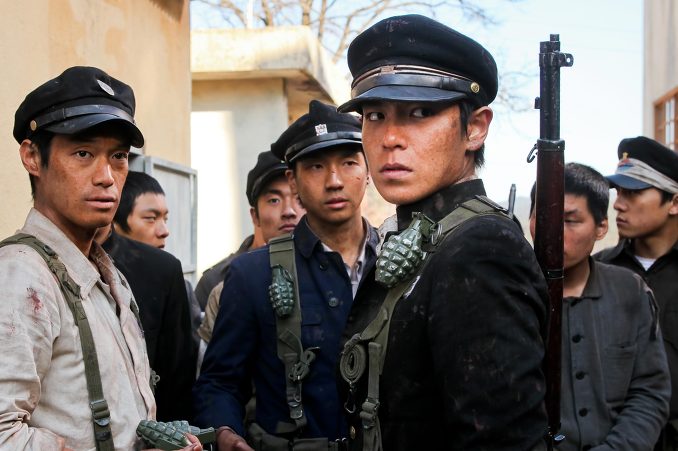
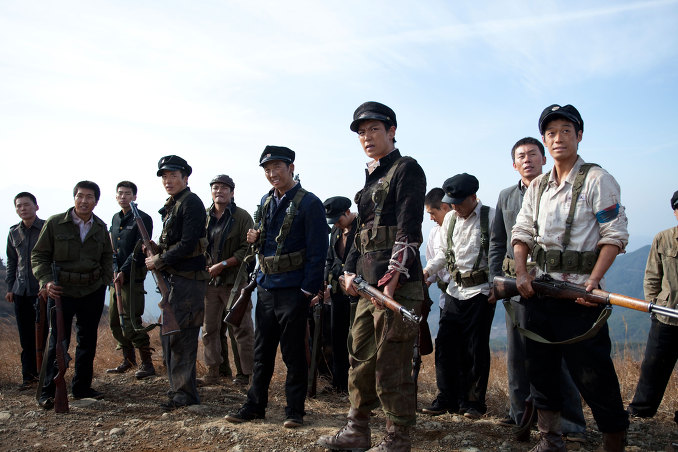
What would you do if you were a young adult during a time when the government issued a military draft for an emergency state of war. Would you fight headstrong performing your call of duty? Would you rebel in anger of your government's decision? Would you cower in fear to stay alive in hopes to see your family again? History has shown that nations in times of war have had no choice but to use their men to fight in combat whether they volunteered or not. One example of this is the Korean War. When North Korea invaded the South in the summer of 1950, South Korea, under immense pressure, issued an emergency draft where hundreds of thousands of young men were literally picked off from their families to fight the Northern army. Sadly, many of the selected soldiers were only young students who had no experience in warfare. However, even these young men have made their historical mark in defending their country and the film 71: Into the Fire shows the miraculous story of just what some of those students were capable of.
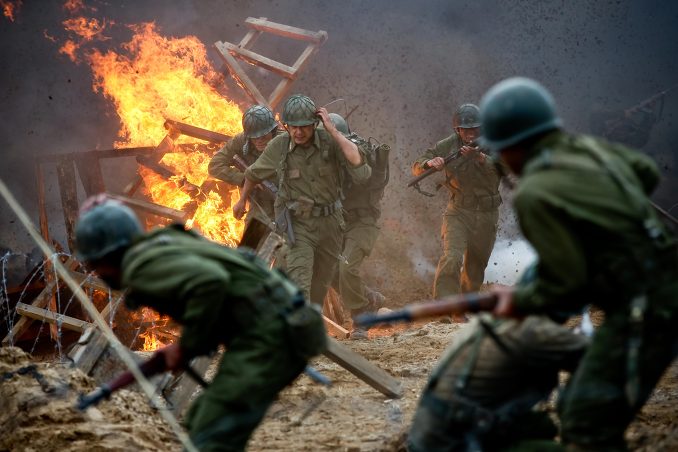
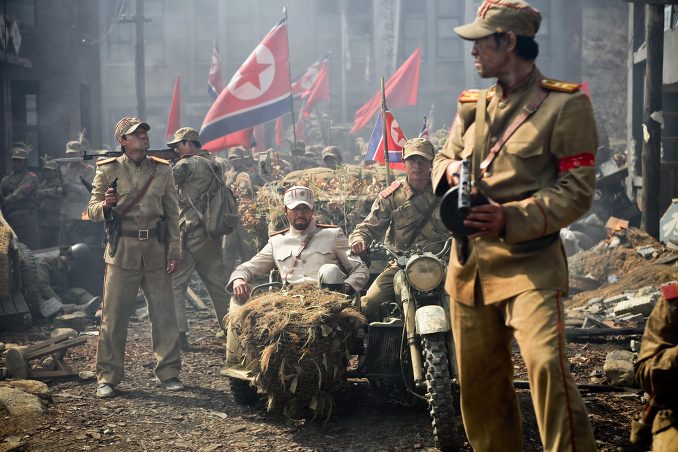
Above is the Cine-Asia trailer made for the English-speaking audience. 71: Into the Fire, directed by John H. Lee, is a Korean 2010 war-film and is a recreation of the true story of the Battle of P'ohang-dong during the Korean War. Here's a brief historical background of the movie. When the North Korean army invaded the South, they were able to push the Southern army far down the country to the Nakdong River which is a river running down the southern part of the peninsula into the city of Pusan. South Korea had no choice but to take every precaution to make sure the North does not advance any further in order to protect what's left of their citizens and refugees. At this point, the P'ohang-dong girls' middle school acted as a strategic defense hold against the North vital for the security of the Pusan perimeter. Unfortunately, the South Korean army was only able to put 71 untrained student soldiers (drafted 18 year-old students) to defend the school where most have never even fired a gun before. 71: Into the Fire portrays the story of these young men and their ability to hold back an elite North Korean brigade for 11 hours which is considered to be a major turning point in the war for South Korea.
Having to recently watch more Korean films (from my last Formal Film Studies), I stumbled upon this piece about the Korean War. Like most war film, it demonstrates the struggles of soldiers in warfare and their greatest moments of courage and determination to fight for their country along side their comrades in arms. This movie in particular though may give the more sadder appeal as it shows life of the student soldier completely brand new to war. Similar to movies like Saving Private Ryan or Letters From Iwo Jima, the story gets very sad yet touching, and the battle scenes are very dramatic and intense. It falls under the typical war film that are made to commemorate historical moments of the war and the people serving in them while still trying to make a successful blockbuster movie. I haven't seen any of John H. Lee's other films so I can't really compare his style to any of his other works, but it seems that he has a good skill in making Hollywood style and Korean style pieces in terms of drama and action.
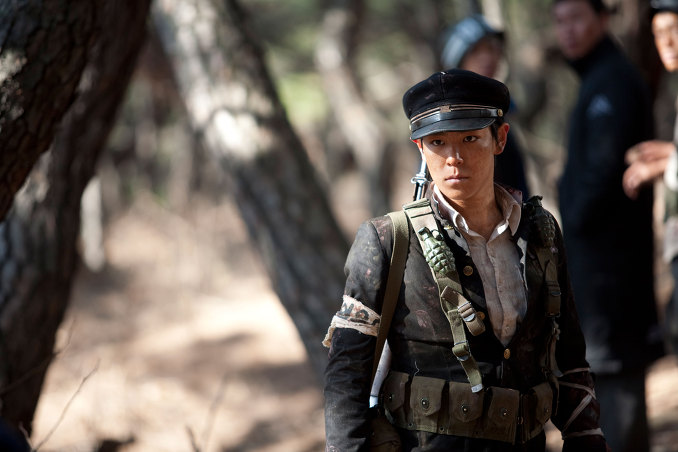
Captain of students (T.O.P)
I'm not familiar at all with the stars of the movie since I don't watch that many Korean films, but it seems that the main character, the captain of the 71 student soldiers, is surprisingly played by the K-Pop star, T.O.P. K-Pop (Korean Pop) has been the most popular music genre in Korea for more than a decade and this particular artist, T.O.P (his stage name), actually stars in this movie. Personally, I don't care for K-Pop so I don't really know much of anything about T.O.P but what I do know is that he is a widely acclaimed K-Pop artist and is one of the biggest reasons why this movie was such a huge success in the box office. I don't know about his career as a singer, but I can say that he has potential in an acting career. I was surprised to find out he was a singing sensation after seeing the movie because he played his role very well. He acted very seriously and dramatically which was very appropriate for this movie. In fact, his character seemed to lean toward more of the angry mood since he portrays this student bearing the responsibility of other student soldiers and protecting a defensive military point. It's hard to believe this T.O.P guy is a K-Pop star with that kind of acting skill.
Can you believe this guy....
...and this guy are the same person???
The movie, as said before, is like many familiar war movies including the cinematic elements. The shots contain quick movements of the camera during the battle scenes and use of discontinuity editing. The camera also shakes a lot when explosions occur or barrages of gunfire are ensuing. The angles will mostly consist of close ups of soldiers and long shots of them fighting and the occasional use of extreme long shots to portray the massive armies and scenic views of the battlefield. Lighting was pretty average with not much variation at all since most of the movie is taken place outdoors during the day. Emotional cues on the actors were pretty vital for the movie so close ups on faces were common. Also during battle scenes, editing was very important so the movie used a lot slow-motion in many of the intense fighting and shooting scenes. Overall, there wasn't anything different about the movie's special effects, shots, and editing compared with other war films since the movie focused more on the story and characters.
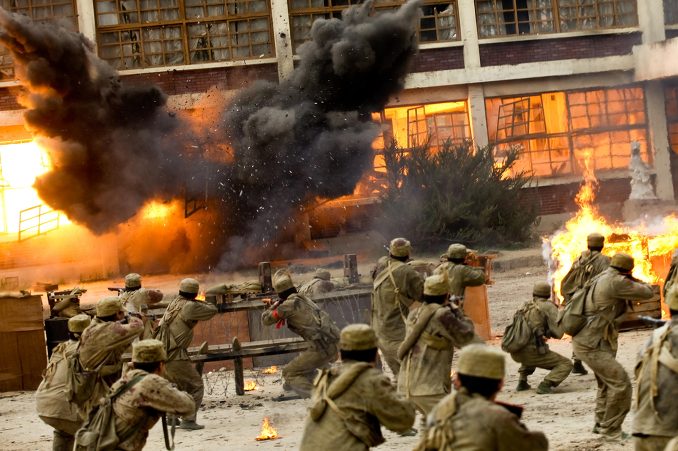
A scene I want to talk about is the beginning of the final battle scene when the South Korean student soldiers are defending their school base from the incoming North Korean brigade. Clearly outnumbered, outskilled, and outgunned, the young South Korean students set up their most strategic defensive position to try and halt the North Koreans. With the use of buried grenades acting as land mines, and constructed walls as cover, the South Koreans are able to take out a good number of the North Korean army in a bloody barrage of bullets and explosions. But as the scene progresses, the North Korean men keep on coming as the students find it more difficult to keep up with their numbers. The scene portrays the typical battle scene of the war movie and uses simple but realistic special effects to make the battlefield come alive. You can also notice how the camera switches back and forth between the two sides to show how the shooting of the students affects the casualties of the North Koreans. Prior to the shootings, you can also see how the camera focuses on the intensity and expressions of the determined student soldiers ready to defend the school and how the subtle zooming of the camera builds up suspense. When the firing does start, the camera gets very shaky and disoriented so to make the audience feel like they are in the middle of the battle and cringe over every shot. This scene also demonstrates the importance of the story as it shows how well-trained and prepared the students became which is exemplified through their organized defense. It makes the audience realize that they are ready for battle and have more courage and determination than ever before to perform their call of duty.
Click Here to watch the scene. Warning though because it is a war scene, so there is obviously a lot of death and blood and killing.
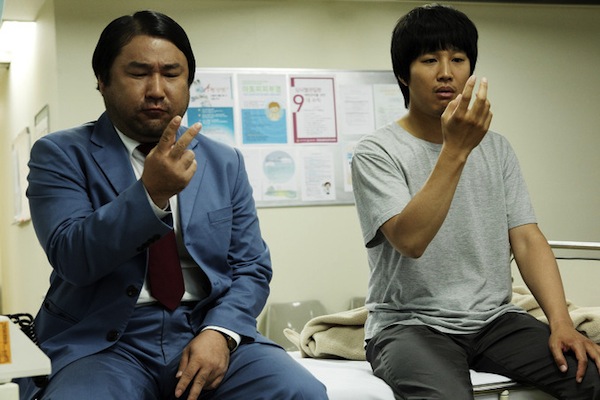
71: Into The Fire was a good war movie, but I wouldn't consider it one of the greatest. I like the fact that it's a movie about the Korean war since there aren't many out there, and there were definitely moments in the movie that made me feel really sad or touched as expected of Korean drama films. In fact, the whole story is one worth remembering and reminiscing over considering the fact that it is a true one. The courage of those young soldiers should be one written for the history books and should set an example of youth and Korean pride. The story definitely uses lots of character development so to make the audience connect more with the young men and feel sadder over their tragic deaths. However, the movie displayed poor and dull acting in some characters like the main general of the North Korean army, and it sometimes showed cliche cheesy shots of explosions and unnecessary intensity. It gave an unrealistic vibe to the movie at times which completely killed the mood. Overall though, it was a successful movie to commemorate a victorious historical moment and it did a good job to appeal the necessary information and emotions towards the audience. I'd give this movie a 7/10.
Actual photograph of the 71 student soldiers at P'ohang-dong girls' middle school.
Incubus is a horror movie about a traveling family on a road trip. During this road trip, the family unfortunately gets a flat tire where they stumble upon a nearby community village that seems pretty isolated in the middle of the woods. While there, they learn of an eerie cult that the village grows concerned of somewhere in the woods. Unable to find a place to stay while their car is being fixed, the family ends up finding the house of the cult. Contrast to the community rumors, the family discovers that the cult is very accepting and welcoming and gladly let the family stay as long as they want. However, soon the women of the family find it very uncomfortable with the cult members as they get separated from the family and are taken advantage of. They eventually become abused, raped, and killed by these cult members from crazed obsessions and the men of the family find it difficult to escape. Soon the men are conformed into the cult and join them in their obsessive beliefs and habits.
The movie will cast some several growing stars to help build up a growing audience and attract viewers. Dustin Hoffman plays as one of the cult members, Clint Eastwood as the cult leader, Richard Dreyfuss as the family father, Julie Christie as the mother, Melissa Sue Anderson as the daughter, and Jason Bateman as the son. The cast here we chose because many of these actors are known for their serious roles and hope that this movie will help spark their acting careers. The director of the film is William Friedkin who also directed The Exorcist. He has shown that he can direct a very successful horror, specifically a horror film about demonic superstitions and corrupted people. The studio helping to make this movie is a small studio called Laurel Group Inc. which was involved in the Night of the Living Dead. Our distributing company was Bryanston Pictures which also has helped in the horror industry such as Texas Chainsaw Massacre and The Devil's Rain.
The genre of this movie is obviously horror. Because it's the 1970s, violence and sex start to become a more popular thing in movies. Viewers want to see more mature and hard-edged stories that makes them cringe or think twice about. This movie provides a horror story that involves psychological torture and disturbances on the women and violent death scenes in hopes to entertain this new 1970s phase. Also this movie provides a blurred concept of good and evil which is also a 1970s film characteristic. This is because as the movie progresses, the viewer sees the men of the movie struggle between the ideals of the cults and the situation they are in. It exemplifies how man can be easily induced to blind leadership and how we cannot tell evil from good at certain times. This movie is essentially a statement on the fact that the men in the movie are clearly corrupted to the point where their free will is no longer there.
The movie is rated R due to the disturbing violence, sexual content, nudity, and language. The movie will be very grotesque obviously not suitable for children. This movie is mostly focused on the attract and entertain adults who enjoy rash movies and story lines that aren't just happy endings. It helps to create a unique style of story telling and movie making in a vulgar style.
Our group did a good job in creating this movie and there really isn't a lot to change about this movie. But if I had to change it, personally I would fix up the story to avoid some plot holes. Like I probably would not involve a community prior to meeting the cult. I would definitely focus a lot on make-up to make the gore of the film as realistic as possible to make this really fit the horror genre.
South Korea is a very unique nation. It's history goes back thousands of years but much of it consists of conflicts with neighboring countries like Japan and China. By the beginning of the 20th century things don't get much better for Korea being under Japanese occupation during the Second World War and then into a civil war right after. In fact, technically South Korea is a relatively new country. Despite the prolonged conflicts and political complications in the past, South Korea has been able to get back on its feet very quickly and even become a world superpower economically. Interestingly enough, because of American influences, Korea has developed culturally throughout the decades especially in the film industry. Korea was first able to produce movies regulated by the government but eventually it became a practiced commercial industry where even today, some Korean films exceed that of many Hollywood movies. To see for myself on how far Korean cinema has gone, I decided to watch three Korean comedy/drama films since this genre is what Korean media is famous for. The three films are (in the English titles) Marathon, Take Off, and Hello Ghost.
Korean films are very different from American Hollywood movies. The style, acting, cinematography, etc are all aspects that make a good film, but Korea tends to execute these differently than what we're used to. When they movies to specific genres, they really like to emphasize the "drama" or "comedy" in their films. What I mean by this is that I've noticed that Korean acting in very dramatic scenes are VERY dramatic. It's as if Koreans have really mastered an art to playing into the emotion and use the perfect amount of context, acting, and music to make a scene so sorrowfully beautiful. In contrast, comedic situations tend to be a lot more uplifting and family-friendly for the audience. It's like Korean films experiment mostly on the extremes of movie genres and hardly touch the middle end. The best way I can really describe Korean comedy is that in American eyes, they may see some scenes as kind of cheesy or childish. The way the actors react and the music in the background is all a little too giddy, but the thing is that those who are accustomed to Korean culture and understand way the dialect, it's perfectly normal and funny.
One of the movies that I watched is called Marathon, a 2005 film directed and written by Jeong Yoon-chul. The movie is about a mother and her autistic son struggling to live a normal life. However, the mother finds it more difficult as the years go to have her son accepted into society and maintain a broken family. The only thing she and her son find solace in is his remarkable enthusiasm and talent for long-distance running. After months of training with an alcoholic ex-marathon runner, the son hopes to accomplish running a marathon under 3 hours in hopes to make a champion of himself and make his family proud. This film obviously just screams major drama from the story itself with the whole disabled son and his mother training for a sports goal. This movie really takes you into the lives of this mother barely able to support her family and still has to take care of a 20 year old autistic man. It makes you feel for this mother as if you are the one struggling too. This movie really fits with the Korean drama style as it really does emphasize the emotional aspect. Korean writers and directors tend to focus on the emotional appeal of the movie to make the plot more riveting and alive. That's what Marathon really did a good job with as watching this movie makes you live with the family and feel just as happy or sad as they are in the movie.
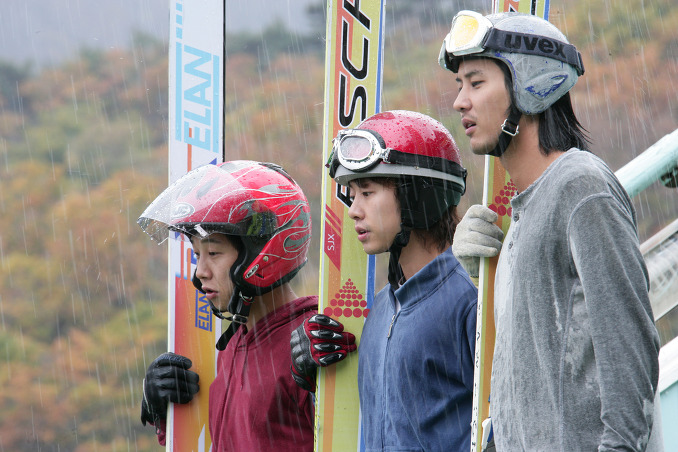
The next film I watched was Take Off, 2009 sports film directed by Kim Yong-hwa. The movie is about the first Olympic ski jump team from South Korea in 1998 and their struggle to train, get national support, and get along with each other. What you can see from this movie is some American Hollywood influence in it starting with the fact that it's somewhat of a cliche sports film consisting of dissimilar teammates, a coach to bring them together, and even one of those training montages that makes the team pro in 5 minutes. However, most of this film expresses so much about Korean culture and cinema style. First, the whole story revolves around a rookie sports team doing an unknown/unpopular sport in a very conservative nationalistic nation. All throughout the movie you get to experience Korean culture first hand with context of Korean family lifestyles, Korean mentalities, and even shots of rural and urban Korea. In terms of cinematic styles, this movie especially demonstrates my previous point in that its comedic scenes are very uplifting and cheerful. But its dramatic scenes are full of intense shots, beautiful music, highlighted angles and slow motion to really push into the emotions of the audience. This piece is a great example of showing the extremes of comedy and drama in Korean cinema while also putting in some Hollywood flavor into it. It really is no surprise to see that it so well with nearly 53 million dollars in the box office according to Wikipedia (Wiki article).
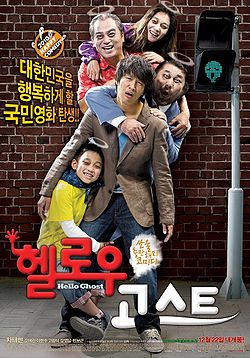
The final movie I saw was my personal favorite of the 3. In actuality, it's one of my now favorite movies. It's called Hello Ghost and it was made in 2010 directed by Kim Young-tak. The story follows a suicidal man who falls short of death after many attempted suicides. However after his closest attempt, he now has the ability to see ghosts who unfortunately use his body for their own free will. In order to rid these ghosts out of his life and body, he must go on a self-discovering journey to help each ghost in their favors to put them at peace. This movie was honestly the prime example of my previous point for the Korean movie style. Take Off was a good example too, but this one really demonstrated exactly what I said. The movie starts out really slow and cheesy in the beginning that it really kind of tests your patience as a viewer. But seriously, the movie grows on you with its clever plot outline and its use of back and forth humor and drama technique. Throughout the movie are so many scenes that I would say can be considered kiddish or childish meant for comedic humor, yet its drama scenes are so surreal and moving that it makes the audience want to cry. And when I mean kiddish, I really mean it looks like it was meant of elementary kids with the playful music and the cute icons. Just take a look at the trailer, and tell me you can't see this movie being any funny or eye-watering sad (Hello ghost trailer). Definitely not the kind of trailers you see in American movie theaters. However, despite this different style, this movie has proven itself a widely acclaimed success. So successful in fact, that Chris Columbus, director of the first couple Harry Potter movies, is actually planning on remaking this movie in an English version (Chris Columbus remaking Hello Ghost)
What I noticed about these movies is that they all really express Korean lifestyle and culture throughout their scenes and shots. That goes for any foreign film, but Korean films in particular tend to really demonstrate their culture by having the characters involve themselves in activities, restaurants, or home-life as if to show to foreign audiences how life in Korea actually is. For example in, Take Off, you see all sorts shots of rural Korea and the local farmers that work there. It shows the lifestyle of Korean vegetable and rice farmers and the traditional side of Korean culture.The movie also demonstrated some of Korean traditional family values through the side story of one of the athletes and his extremely strict father especially in one scene where the father is beating his son with a golf club for ski jumping instead of helping the family restaurant. Another example is in Hello Ghost, where there will be shots of the main character eating certain Korean foods in restaurants, watch animations, and even show urban home-life where he shows how a typical middle class Korean lives in the city. The movies show profound examples of Korean culture whether they are subtle or right at your face which is what I believe is part of Korean national pride. South Korea tends to demonstrate a lot of national pride and they'll try to demonstrate this in as many ways possible. In this case, they even attempt to do so in their movies.
Here are the full movies of Take Off and Hello Ghost with English translation. Marathon is actually on Netflix instant access.
I haven't really gotten into Korean films until a couple years ago when I started watching them with my dad. The difference between watching Korean films and American ones is that I can personally relate to Korean movies with my own Korean values and traditions which make them that much more entertaining to me. Especially after watching these movies, I plan to watch a lot more of them and hope that Korean cinema will make a larger impact in world media.
The sun is without a doubt the most important form of energy that makes life on Earth possible. Scientifically, it's the reason plants grow, animals flourish, and literally make the earth move. It's the closest star to us averaging about 93 million miles from Earth and is also about 1.3 millions times larger than Earth. It gives off solar rays that has provided light and heat for our planet for millions of years. It's the center of our solar system and just a speck in a dust cloud of other stars in our galaxy. It's Earth's life source and unfortunately it doesn't last forever. In the eventual future (but luckily not in our lifetime), the sun will die and Earth will cease to exist. But will mankind be advanced enough by then to do something about it? Is preventing the sun's demise even reasonable? If you watch Sunshine, the movie will take you on a sci-fi adventure that will make the impossible possible.
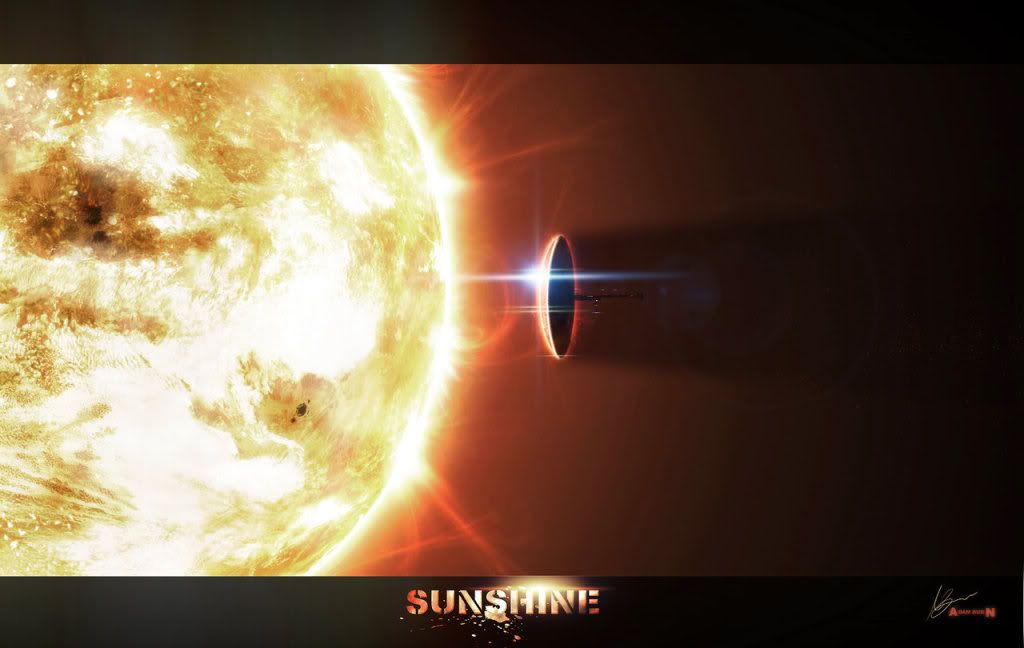
The trailer is the clip above. Sunshine is a 2007 sci-fi film about the sun slowly dying threatening the extinction of all life on Earth. The movie was directed by Danny Boyle (127 Hours and 28 Days Later) and follows a small crew of scientists that risk their lives to save the sun and the human race. In the near future, Robert Capa, played by Cillian Murphy (Batman Begins and Inception), is part of the space crew of scientists in an umbrella-shaped ship called Icarus II whose sole mission is to reignite the sun through a nuclear fusion reaction from the ship. After a failed mission of Icarus I with the same purpose, the crew of Icarus II must face dangerous obstacles and challenges that may compromise the mission and destroy the ship. As humanity's last hope, the team risks everything in their power to make sure that the sun stays alive.
Icarus II
This movie was a combination of thriller, adventure, and science-fiction. It keeps you on the edge of your seat like any suspenseful movie should, it provides a decent storyline for the adventurous aspect, and it's special effects are remarkable and cool to keep the sci-fi fans out there happy. This is definitely one of Danny Boyle's least remembered movies but his credibility is still prominent in this film. He's really good at making the conflict the characters face very intense. You can tell that conflict is a major focus of Boyle's works. This is exemplified in his previous movies like Slumdog Millionaire wherethe main character went through conflict against corruption and poverty in his life, and also in 127 Hours when the main character had to make a life or death decision in the hole he was trapped in. In Sunshine,conflict seems like a never ending theme because after one problem the crew has to fix gets solved, another one immediately follows. And these aren't easy problems either. Danny Boyle plays around with the psychological aspect of the characters by presenting conflicts ranging form physical dilemmas to controversially moral issues.
Robert Capa
The cast of this movie actually consists of several familiar actors. One of the stars here is Cillian Murphy. Cillian Murphy is a very good actor in my opinion and plays his role rather well. I feel like he specializes in the roles where he needs be sophisticated, serious, and emotional only when necessary. In the movie, he plays Robert Capa, a physicist in the crew in charge of igniting the bomb. As that character, Murphy needed to show a side of intelligence and ingenuity which isn't the first time he's done this. In Batman Begins, you can see his role as a dark yet genius character playing the enemy Scarecrow. Another famous actor in this movie is Chris Evans (Fantastic Four and The Avengers). Compared to his previous roles in Fantastic Four or even in his newer movies like Captain America, he is not an actor I can get really see to play in such a dramatic and intense movie. In the Fantastic Four series, he is suppose to be the comic relief which shows his humorous side, but in Sunshine he is suppose to be this tough assertive engineer. It was kind of hard to take him seriously, but in actuality, he did pretty decent in his role to keep that serious mood.
The cinematic elements making up this movie consisted of all kinds of shots. The calm and relaxing scenes just used basic still long shots to establish the setting of the ship and close ups for the character dialogue and facial expressions. In contrast, the intense edge-of-your-seat scenes used shaky camera angles and quick discontinuity editing to disorient the audience in confusion. The use of lighting was not as demonstrated because it was all in a confined ship so everything was lit up like it would be in a spacecraft. But for some of the most memorable shots, the movie used silhouettes of the characters in front of the sun to show it in awe and its relative beauty and power over the characters. When the movie would show the scenes of the ship itself it focused a lot on extreme long shots to establish the ship relative to the sun. This element was vital to show how minuscule the people were to take on such an enormous task. The contrasting sizes demonstrates how insignificant the characters and the ship seemed and really plays into the idea of helplessness into the audiences' minds. Can the crew really pull this off? Or is it just a hopeless journey?
A very powerful scene of the movie I'd like to focus on is the scene were Capa has to actually fly through space. Without trying to spoil too much of the movie, I'll try to explain it as best as I can. By this point in the movie, the ship Icarus II is close enough to the sun that the payload, or the nuclear bomb that will reignite the sun, can detach from the rest of the ship and head straight for the sun to do its thing. However, through a series of prior complications in the ship, Capa ended up trapped on the ship only to soon be destroyed by the sun's solar rays due to the removal of the mirrored shield. Knowing that staying any longer will get him killed, Capa must do the unthinkable by suiting up and literally take a leap of faith across to the payload before it launches so he can manually ignite the bomb. Throughout this scene many cinematic aspects are shown. First the music in the background is a symphonic piece that emphasizes the suspense of the scene and its dramatic importance to the plot. The scene uses quick shot changes showing Capa, the clock counting down, and the ship itself. It mostly switches shots between Capa's face in his suit, and shots outside his suit to show his most complicated struggles just to escape and his utter desperate expressions on his face. With reference to the clock countdown, the scene gradually builds up suspense until the climax where he actually jumps across to the payload. On a literary analysis, this scene signifies a major importance to not only the plot so Capa can save the world, but also his character development. Previously throughout the movie, it was shown that Capa had a demonstrated fear throughout the mission of the sun whether it was failing the mission or dying in the solar abyss. But this scene shows that he had to overcome his biggest fear (again a conflict of man vs self that Boyle emphasizes) and prioritize the mission over anything else.
Click Here to watch this pretty awesome memorable scene.
Capa's Leap of Faith
I thoroughly enjoyed Sunshine. It was intense, entertaining, cool, and in some ways inspiring. This is the kind of movie that had a lot more meaning into than it looks. There was much symbolism and ideological philosophies used in the story and character development was very vital. The story's use of a kind of "what would you do in that situation?" theme is constantly portrayed making the audience cringe over the many conflicts the characters in the movie had to go through. However, the one thing that kind of bothered me was the whole realism of the movie. For example, how does the ship have it's own gravity for the crew members to easily walk? Or how can the mirror shields possibly withstand the solar rays? Maybe the fact that it's a sci-fi movie is enough reason for me to just accept the logic of those questions, but still I don't remember any explanations. Also I had some problems with the intro of the movie. I felt that Boyle could have probably put in a more explanatory introduction to the journey rather than just start straight to it after Capa's whole inner monologue. However overall, this was definitely one the better modern sci-fi movies I've seen but not something worth seeing twice. I'm going to give this movie a 7/10.
We've all been there. We've had all our fair share of experience dealing with the nuisances of the airport. Walking miles with heavy bags through the airport, waiting endlessly to get through security, paying overpriced foods in the terminals, waiting hours more for delayed or cancelled flights, or even competing for others for the use of the only outlet at the gate. Needless to say, I think we can all agree that airport adventures are not fun. They are annoying and frustrating and it just makes us feel like the sooner we get out of the airport the better. But now imagine having to actually live in the airport. Like literally sleep, eat, and even bathe in the terminal itself. Most of us can hardly handle a couple of hours stuck in the airport let alone live in one. Well if you have troubling envisioning it, The Terminal will help do it for you.
The above clip is the trailer for The Terminal. This 2004 film was directed by Steven Spielberg (Saving Private Ryan and Jurassic Park) and is about an Eastern European man who is forced to live in the terminal of John F. Kennedy International Airport due to inaccessibility to the U.S and his own native country. Tom Hanks (Forest Gump) plays Viktor Navorski who has just arrived in JFK airport in New York City from a fictional country named Krakozhia. However, during his flight, a military revolution started in Krakozhia making the United States unable to recognize it as a nation anymore. This, in turn, makes Viktor's passport unacceptable due to the revolution, which also makes him unable to enter the U.S (outside the airport), or even return back to Krakozhia. Therefore, he is forced to stay in the terminal of the airport until the revolution ends. Barely even able to speak English, Viktor must literally live the airport life and learn about America solely through what he has access to in the terminal and the people he meets.
Viktor Navorski
This movie is by far one my favorite Spielberg movies. It may even be one of my favorites in general. It's a satirical piece that really uses characters and the airport as basically a giant metaphor. What I love most about this movie, is its ability to send a message to the audience. The story was very well-written and the whole scenario of the film sends a blatant moral at the end of the movie about patience and waiting. Spielberg cleverly uses the context of airport life and createa story to basically make an ironic statement about the way businessmen, travelers, and tourists rush all over to catch a flight. Speaking of Spielberg, this film has definitely brought worth to his credibility as a director. Looking back at some of his prior movies with Saving Private Ryan, Schindler's List, or A.I, he has this amazing talent to make very touching and meaningful dramas. The Terminal is no exception because he is able to create multiple stories within the movie, whether it be Viktor's struggle to get to America, learn english, or fall in love, and blend them together to make a masterpiece for the audience to feel very emotional for.
Amelia Warren
If you look at my last post, I reviewed Angels and Demons starring Tom Hanks. Well he just happened to be in this movie as well. But instead of genius professor who saves a city, he plays a foreign middle aged mad with broken english hardly knowing anything about the U.S. Like I said before, Tom Hanks can play a serious role very well when he needs to be which is very appropriate for this movie. However as a comedy piece too, he needed to show his ability to make the audience laugh as well, and the thing is he did. Hanks was, in my opinion, phenomenal in this movie because he manages to make the audience laugh and weep even while faking an impressive Eastern European accent. This isn't the first time he has done this either. In Forest Gump, he showed exceptional acting with his southern accent and also in Catch Me If You Can with his Boston accent and still demonstrate his comedic and serious acting skills in both movies. The other star featured in this film is Katherine Zeta-Jones (The Mask of Zorro) who plays Amelia Warren, the flirtatious round-the-clock stewardess who spends almost just as much time in the airport as Viktor who she also begins a growing relationship with. Now I've only seen a couple of her films like Chicago and Ocean's Twelve, but even in comparison with those movies, her acting is pretty predictable. She manages to be in a role where her character always has to be the sexy type and the bad girl in a kind of way. She still does a good job playing her part in The Terminal being able to act very seriously and romantically, but her acting is definitely limited nonetheless especially for her potential.
Viktor's friends
Now the cinematic elements were obviously very crucial for this film. You can tell that Spielberg made sure that every angle, shot, and use of lighting was appropriate for specific scenes. Unlike the past films I reviewed, this films is very family friendly and isn't dark at all. The whole setting of the movie was a well-lit airport terminal so the overall lighting of the film was happily bright and crystal clear. This was obviously used to show very simple comedic and plot developing scenes in an easy way. The only rare dim or dark shots were scenes where the mood was very toned down and serious and required the audiences' immediate attention to the dialogue and character expression. The camera angles used ranged from extreme long shots of the airport to close up shots of characters. It was pretty basic still camera work with no necessity of exaggerated movement.
A very memorable moment of the movie was the date scene. In the movie, Viktor and Amelia have gotten to know each other long enough for Viktor to ask her out to dinner. However due to the circumstances of his situation, he has no choice but to take her to out to eat only in the airport itself. So, he and his friends cleverly set up a romantic and beautiful dinner table on the balcony over looking the runways where he and Amelia can formerly enjoy a date. Throughout their little date, Navorski is trying his hardest to impress Amelia and Amelia is trying her hardest to keep her focus away from work (hence the constant beeping from her pager) all the while Viktor's friends that he met in the airport service them to help Viktor. This scene is a very important scene both for the story and the message. Within the dialogue exchange, Amelia tries to have an interesting conversation with Navorski about history but is frustrated when she is interrupted by her work which makes her give up on the date after her confession about her life slipping by and how she's "waiting" for the right moment to change it. Aside from the humorous entertainer in the background for comedic relief, this scene mainly focuses on the character development of Amelia and explains her life which, in turn, also foreshadows the main message of the movie. It helps us as the audience understand her situation more and her connection with the main character, Viktor. The scene essentially only uses 3 simple shots between close ups of Viktor, Amelia, and a long shot of the dinner table to make the audience pay more attention to their dialogue. The music in the background is also very mellow, quiet, and sad to set an emotional mood. The editors did a very good job but most of the credibility behind this scene is definitely the writing.
The video below shows the scene but for some reason cuts off Amelia's story explanation, and Viktor's confession. So if you want to know what happens with them, just watch the movie. It's good, trust me.
The Terminal is definitely one the most underrated movies for both Spielberg and Hanks. I really enjoyed this movie and the more I watched it, the more I really began to understand it and appreciate the whole structure of the film. The movie was both cleverly and beautifully made which makes the film very touching for anyone who watches it. It was also able to use multiple layers of stories differing in styles and mood to create a movie that people can laugh and cry at. The only issues I had, if there really were any, were that some of the scenarios and scenes in this film are not very realistic at all making some parts of the plot questionable. But overall, I don't really have many bad things to say about this film. It's a very well-written and well-made piece of film and I could confidently give it a 9/10.
Vatican City is one of the most renown and historical cities in the world located within Rome, Italy. It is home to some of the world's most spectacular monuments and buildings that represent art, religion, and history. And of course, it is also the capital of the Catholic faith where the pope himself lives. It truly is a remarkable and symbolic city and from what I also hear, it's quite a popular tourist site as well. However, what if there was more to the Vatican than the world knew? What if there are hidden secrets and a lost history that the Vatican had tried to lock away for reasons unknown? Well, if you're just as curious as I was, then Angels and Demons will show you the famous city like you've never experienced before.
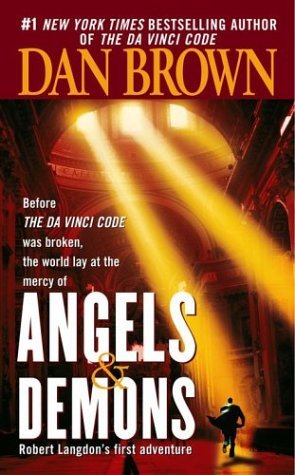
Novel Cover
The above clip is the official trailer. Based on the Dan Brown book with the same name, Angels and Demons takes the very eternal dispute between science and religion to a whole new level. I've read the book and watched the movie and I've got to say they were both very entertaining despite how different they surprisingly were. This 2009 film directed by Ron Howard (A Beautiful Mind and Apollo 13) follows the symbology/history professor, Robert Langdon, in his dangerous journey to help stop a devastating terrorist plot against the Vatican during the Papal Conclave or the electing of the new pope. In a race against time, Langdon, played by Tom Hanks (Forest Gump), must rediscover a secret ancient trail within the city to fight terror with knowledge and stop one of the world's worst cataclysms ever. The movie starts out with a group of nuclear researchers creating large amounts of anti-matter. Meanwhile the Vatican mourns over the sudden death of the pope and prepare for Conclave. Soon the leading nuclear researcher is murdered and a container of the antimatter is stolen threatening to cause a near-nuclear explosion. The Vatican eventually finds that an ancient brotherhood known as the Illuminati have stolen the anti-matter and kidnapped the 4 likely canditates of the next pope planning to kill them one by one and destroy the city with the anti-matter.
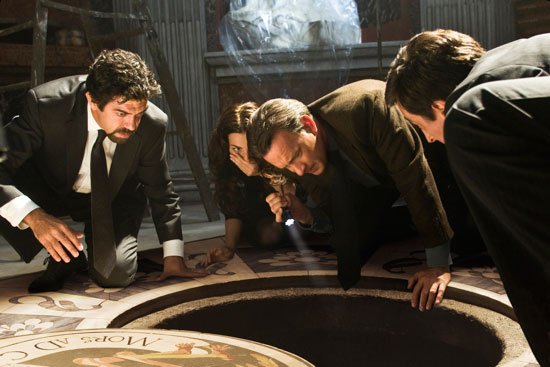
Illuminati (Ambigram)
Vatican City (St. Peters Square)
What's really interesting about this movie is its ability to keep a constant mood of suspense. It's one of those movies that keep you on the edge of your seat until you can settle down with a conclusion. Ron Howard did an exceptional job with this style of suspense and I'm not surprised. Looking back at his movie Apollo 13, it nearly kept the adrenaline going of every audience member throughout the movie, and this piece was not so different. The way the story uses a countdown to a final climax made it very easy for Howard to take advantage of in terms of creating a suspenseful and mysterious setting.
Professor Langdon
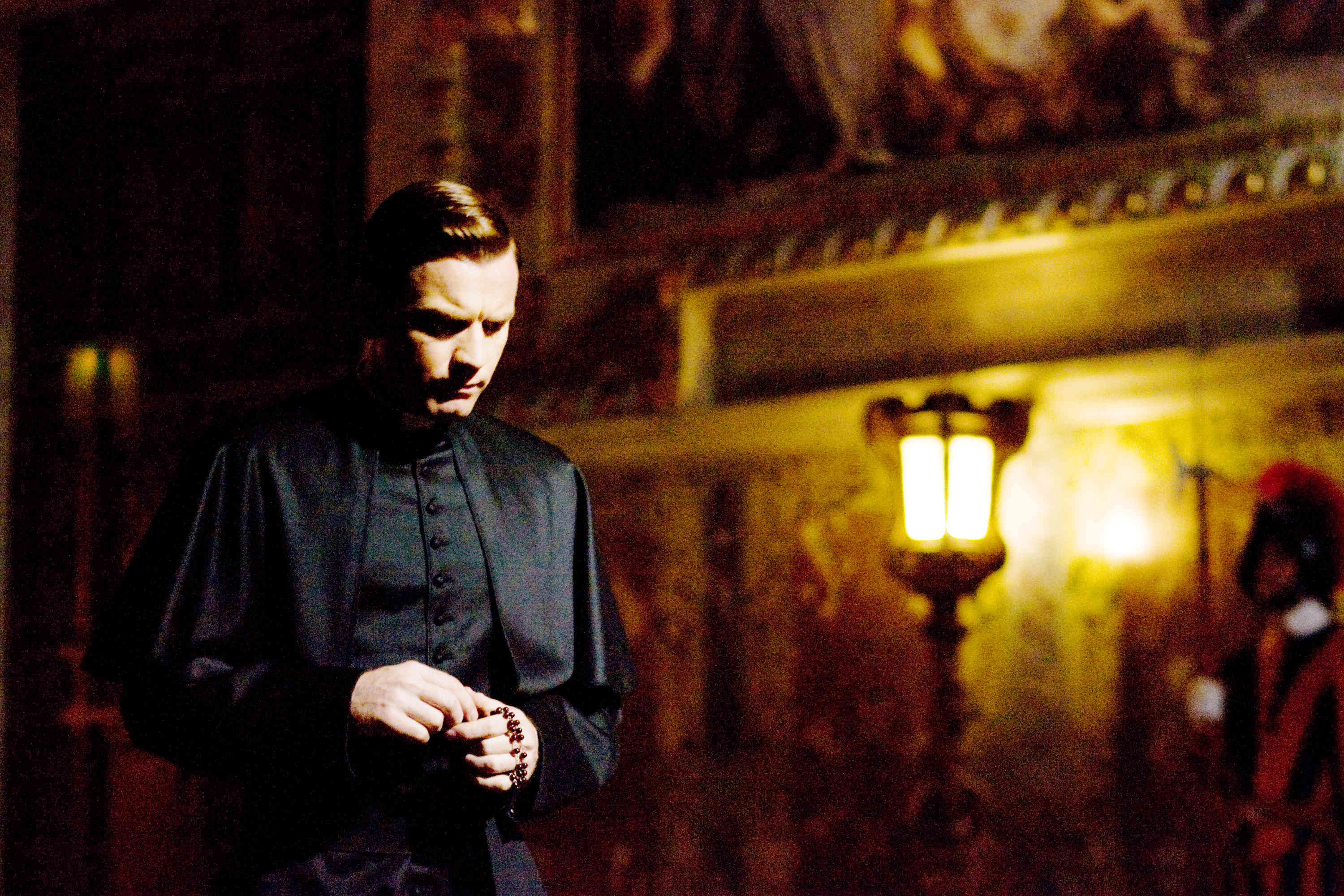
Looking at the cast, I was actually rather pleased with the fact that Tom Hanks played the part of the professor. Something about him gave off a kind of intellectual vibe from the movie and the way he is able act made him a good part as a knowledgeable professor. He can play a serious role very which is exemplified in his characters as Captain Miller in Saving Private Ryan and as Forest in Forest Gump. Plus again with suspense style, you can tell he is able to act accordingly too as shown also in Apollo 13. Ewan McGregor is also a star in the film playing Camerlengo McKenna, the temporary head of the Vatican during Conclave. He plays his part rather well too, although, he as an actor has never really made a large impression on me. To me, he seems more like a mediocre gets-the-job-done kind of actor where you appreciate his character but don't really appraise his skills as much as he probably deserves. I felt that way about him in his role as Obi-wan in the Star Wars series and Grimes in Black Hawk Down. Having said that, however, he did show some unique expressions and character in this particular movie especially near the end which I rather enjoyed.
Camerlengo McKenna
The movie itself, like I mentioned before, focuses mostly on suspense. So in terms of cinematic elements, the camera work was literally very shaky. The way the plot moved was very fast-paced and only really slowed down when there was serious and important dialogue between characters. One thing very spectacular about this film was its use of extreme long-shots to display much of the beautiful Vatican City with its incredible architectural buildings and churches and plazas. The movie also showed great use of long shots and close up shots to focus on specific objects like statues, art, and the character's expressions in certain situations. These shots were key in the plot because as the audience, we were following the viewpoint of Robert Langdon and how he sees his clues and solves his puzzles. The movie was rather dark both literally and figuratively so the lighting mostly involved low-key lighting on the characters and objects especially in church scenes where the aura is rather eerie and mysterious with a hint of suspense.
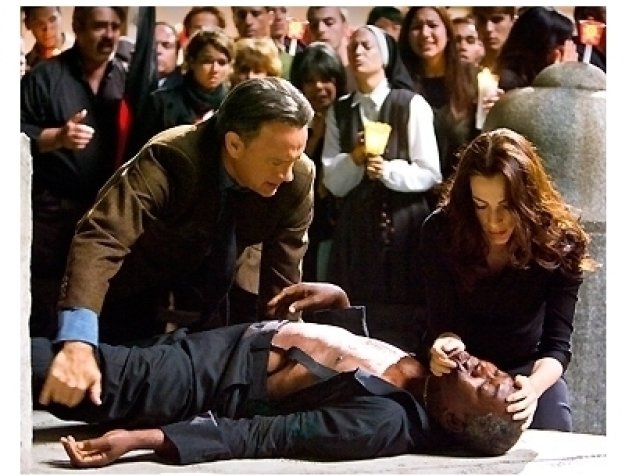
One scene I'd like to focus on is the scene where Professor Langdon and Vittoria, the nuclear researcher, are desperately looking for the Illuminati terrorist in St. Peters Square. They know the Illuminati will kill the next pope candidate in the Square according to the secret ancient trail they were following. However, because of the situation with the deceased pope and the Papal Conclave, the Square is filled with massive amounts of people making it very difficult to locate the killer or the candidate. Soon, the scene shows a young tourist girl drop her doll on a pool of blood from the wounded Cardinal. Her screams bring attention to Langdon and the police where they discover the injured Cardinal dying from a punctured lung and the ambigram "Air" branded on his chest. After a failed CPR attempt to save him, he dies on the floor of the Square. This scene is a very good representation of the movie as a whole because it involves a lot of suspense and mystery. In context, the audience would be on the edge of the seat looking just as hard for the candidate as Langdon only wishing they could save him in time. The scene shows lots of long shots showing the masses of people and quickly switching with close-up shots of Langdon and Vittoria to show their desperate expressions of finding the killer. This is a unique technique where it'll show setting and character back and forth to make the audience see in the characters' views. The way the scene was edited was very fast-paced making us seem like we are struggling to find the killer too. This adds much suspense as does the music in the background which gradually gets more intense until the climax of the scene where we find the dying Cardinal. Along with the dark lighting, quick shot changes, and use of discontinuity editing, we are forced into a mood of suspense and mystery which is exactly what the scene and movie intended to do.
Click Here for a link to the scene (It's slightly bloody though so be warned).
Ambigram example
What I loved about this movie was that it was entertaining and interesting all throughout the film. I thoroughly enjoyed learning about history, appreciating art and architecture, and following a fantastic story. The book had the same effect but the movie definitely gave it that visual aspect that I love. The ending was phenomenal as well although it was somewhat strange and unreasonable, but I won't give away anything here. But I'll just say it's one of those movies that left a pretty impressionable finale for the audience. The problems I kind of had with this movie was that it was pretty unnecessarily gory and disturbing at times and it can get very confusing very quickly if you don't pay attention. At some parts I had to rewind to try and understand the dialogue exchanges between the characters and sometimes they would mumble, be quiet, or talk really fast so it sometimes got annoying. The movie does a good job of using just the right amount of comedic relief and also uses very neat special effects to make that action genre of film. Plus, just as a fun detail, I really loved the whole ambigram concept the plot used where a word design is the same thing upside down and right side up. Definitely one of the most interesting things about the story. Anyways, overall, I really enjoyed it and it is definitely a great film for first-time viewers. For this movie, I'd have to give it a solid 8/10.

 Above is the official trailer for Inception. Inception is a 2010 science fiction thriller about a team of thieves whose profession involves entering the minds of their targets and steal thoughts, ideas, or plans. Christopher Nolan (The Dark Knight and Memento) directed and wrote this movie to create another psychological thriller that involves an ingenious story about the mind. Dom Cobb, played by Leonardo DiCaprio (Titanic and Django Unchained), is a professional dream extractor who is an expert on the complicated method of entering someone's dream to extract certain ideas. However due, to previous complications with this in his personal life, he is forced to be on the run constantly. Soon, a powerful businessman offers him the opportunity to return home to his family if he and his team are able to complete an impossible task to plant an unconscious idea rather than take one. Cobb accepts the dangerous task as he and his team risk their very sanity in the world of the human mind.

 The scene that I'd like to focus on is the hallway fight scene where Arthur, played by Joseph Gordon-Levitt (500 Days of Summer and Looper) is fighting one of the dream's projections, people the subconscious creates that kill invaders, in a hotel corridor. In the movie, the team has already entered the 1st level of the dreams be in the back of a moving van, and then move into the 2nd level which is in a hotel. While they are in the hotel, the team moves into the 3rd level while Arthur stays behind to wake them up in time. However, he is interrupted by a projection and the fight between them ensues in the hallway, but because of the car chase in the 1st level, Arthur and the projection find themselves fighting each other in shifting gravity making the scene that much more intense and entertaining. The scene involves a lot of back and forth shots between the 1st and 2nd level letting the audience know that the two sequences are occurring at the same time. Camera angles include quick shot changes and one continuous shot of the choreographed fight. Interestingly, this continuous shot stays with the hallway so it looks like the men are just flying around the hallway while fighting. It's a very cool shot, but what makes it even cooler is the fact that this shot was not computer generated. That's right, the whole fight scene was real including the hallway. Christopher Nolan actually created a massive suspended corridor that rotated constantly and put the actors to fight in there. Then he just rotated the camera with the hallway to give it that unique sequence the audience remembers. Talk about dedication.












.jpg)