Everyone has experienced a dream before. It's the one time where your subconscious takes control while you sleep. Dreaming occurs in the REM stage of the sleep cycle, and of course if you've experienced it, you basically see, hear, and live a whole new reality inside your mind. Dreams can vary from insanely strange situations to the worst and most horrific scenes. The concept of dreaming has been questioned and researched for centuries. Psychologists, neurologists, and philosophers have tried to discover the purposes of dreams and their significance in our lives. Is there more to a dream than we anticipate? Do dreams portray our greatest desires, regrets, and fears? Do dreams have the power to influence the very way we think? In a really cool and abstract way, Inception takes the concept of dreams and creates an adventurous thriller and story line that offers a new perspective on reality.
Above is the official trailer for Inception. Inception is a 2010 science fiction thriller about a team of thieves whose profession involves entering the minds of their targets and steal thoughts, ideas, or plans. Christopher Nolan (The Dark Knight and Memento) directed and wrote this movie to create another psychological thriller that involves an ingenious story about the mind. Dom Cobb, played by Leonardo DiCaprio (Titanic and Django Unchained), is a professional dream extractor who is an expert on the complicated method of entering someone's dream to extract certain ideas. However due, to previous complications with this in his personal life, he is forced to be on the run constantly. Soon, a powerful businessman offers him the opportunity to return home to his family if he and his team are able to complete an impossible task to plant an unconscious idea rather than take one. Cobb accepts the dangerous task as he and his team risk their very sanity in the world of the human mind.
The movie was directed by the very clever and well-known Christopher Nolan. If you look at my first MYST post about the movie The Prestige, I mentioned that Nolan was a very good director that likes to focus on complex plot themes and plot twists. His previous movies like The Dark Knight demonstrates the way he is able to create a vivid storyline that involves more than just a simple hero fighting a villain cliche. Nolan likes to focus on sophisticated dialogue and thematic messages that are subliminal within the plots. The Dark Knight, The Prestige, Memento all include this style and of course Inception is no exception. It uses the complex elements of dreaming and mental thought to form a very interesting and entertaining plot. Along with Nolan's use of action sequences and even a dramatic side story, the movie maintains a very solid structured and organized piece with a variety of classic and new styles.
Dom Cobb
What is also interesting about this movie is the cast used. Leonardo DiCaprio is the main character of the movie playing as Dom Cobb. Now DiCaprio was already a very famous actor prior to this movie but Inception definitely help boost his reputations and popularity among the average viewer and film industry. Leonardo is famous for playing the more suave character in his roles that demonstrate class, cleverness, and sophistication. This is exemplified in Catch Me If You Can,The Great Gatsby, and even in Titanic. However, Inception definitely shows a more stern and slightly more grim side of Leonardo since Dom Cobb is a lost yet determined character in the movie. DiCaprio did a phenomenal job with it really portraying necessary intensity, anger, empathy, and sorrow for specific scenes of the film. What I also find interesting is that Nolan likes to use a lot of the same actors and actresses in his movies including this one. Some of these actors include Joseph Gordon-Levitt, Michael Caine, Cillian Murphy, Tom Hardy, etc. All of these actors are at least in one or more of Nolan's other films which kind of shows how much he trusts his cast or how reserved he can be.
Tom Hardy and Joseph Gordon-Levitt
The cinematic elements of this movie are eye-boggling to say the least. You can tell the movie spent a lot of time and money to nail certain shots, special effects, and creative editing to form a masterpiece of cinematography. First off, the lighting of the movie ranges from bright to dim depending on the setting. Because it mostly relies on dialogue to tell the story, lots of low-key lighting was used to bring focus on the characters' faces. Extreme long shots was used many times to portray the computer generated landscapes and skylines that would naturally bring awe to the audiences' eyes. Also there was lots of use of discontinuity editing for those action-packed scenes of fighting and shooting. Overall there was great use of camera angles and shots to create a mind-bending cinematic masterpiece. Now the editing was very important for the film's visual display especially for the sequences inside the dream states. Whenever anything "impossible" would occur, the movie used well-made CGI and sometimes even real special effects to express the movie's action. It was used very appropriately and made the movie visually entertaining and fun to watch which is part of the reason why it was a great success.
The scene that I'd like to focus on is the hallway fight scene where Arthur, played by Joseph Gordon-Levitt (500 Days of Summer and Looper) is fighting one of the dream's projections, people the subconscious creates that kill invaders, in a hotel corridor. In the movie, the team has already entered the 1st level of the dreams be in the back of a moving van, and then move into the 2nd level which is in a hotel. While they are in the hotel, the team moves into the 3rd level while Arthur stays behind to wake them up in time. However, he is interrupted by a projection and the fight between them ensues in the hallway, but because of the car chase in the 1st level, Arthur and the projection find themselves fighting each other in shifting gravity making the scene that much more intense and entertaining. The scene involves a lot of back and forth shots between the 1st and 2nd level letting the audience know that the two sequences are occurring at the same time. Camera angles include quick shot changes and one continuous shot of the choreographed fight. Interestingly, this continuous shot stays with the hallway so it looks like the men are just flying around the hallway while fighting. It's a very cool shot, but what makes it even cooler is the fact that this shot was not computer generated. That's right, the whole fight scene was real including the hallway. Christopher Nolan actually created a massive suspended corridor that rotated constantly and put the actors to fight in there. Then he just rotated the camera with the hallway to give it that unique sequence the audience remembers. Talk about dedication.
I thoroughly enjoyed Inception. I know it seems kind of biased since I give so much appraise to Christopher Nolan before, but the movie was honestly a big hit to me. It had cool action, a great and creative story, fantastic acting, beautiful cinematography, and even the amazing twist that I love so much in Nolan movies. It certainly left a large impression to me when I finished it and is definitely worth seeing more than once. Sadly, I'd have to say that my only problem was that I did find some plot holes where no Inception fan could explain. However, I can't say I'm that surprised considering how already complicated and complex the story line was in the first place. It was bound to have some kind of technical error. So having said that, the movie was good and it definitely gained my attention even after the ending credits. I'm giving this one a 9/10.
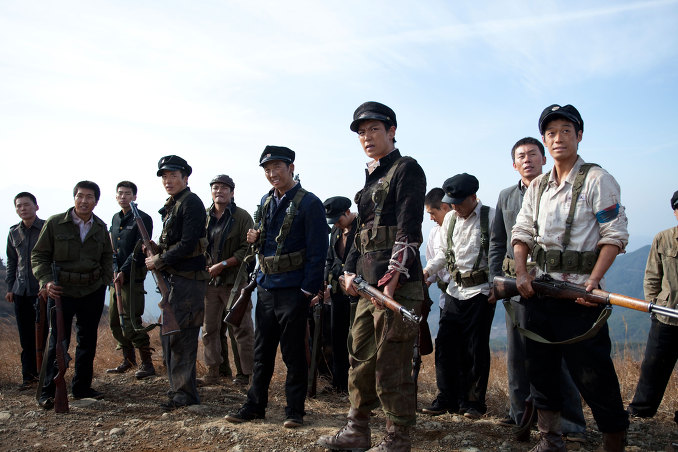
What would you do if you were a young adult during a time when the government issued a military draft for an emergency state of war. Would you fight headstrong performing your call of duty? Would you rebel in anger of your government's decision? Would you cower in fear to stay alive in hopes to see your family again? History has shown that nations in times of war have had no choice but to use their men to fight in combat whether they volunteered or not. One example of this is the Korean War. When North Korea invaded the South in the summer of 1950, South Korea, under immense pressure, issued an emergency draft where hundreds of thousands of young men were literally picked off from their families to fight the Northern army. Sadly, many of the selected soldiers were only young students who had no experience in warfare. However, even these young men have made their historical mark in defending their country and the film 71: Into the Fire shows the miraculous story of just what some of those students were capable of.
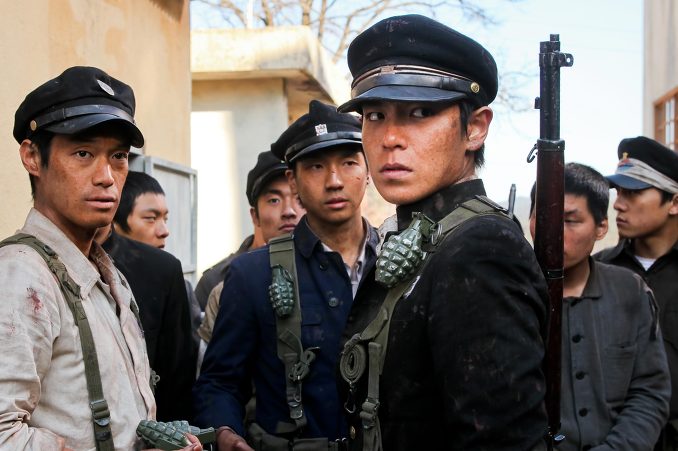
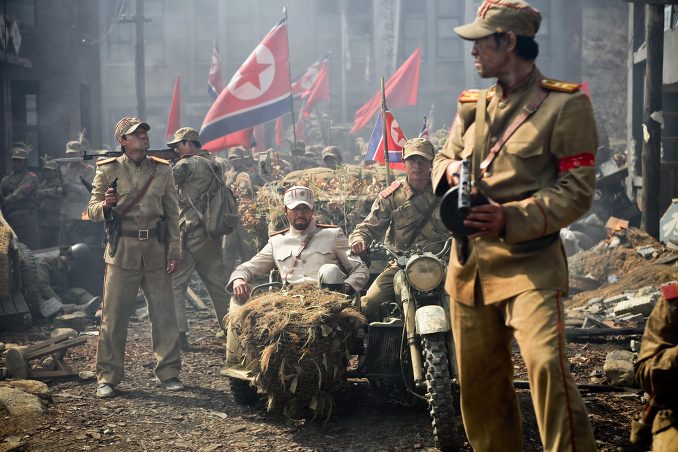
Above is the Cine-Asia trailer made for the English-speaking audience. 71: Into the Fire, directed by John H. Lee, is a Korean 2010 war-film and is a recreation of the true story of the Battle of P'ohang-dong during the Korean War. Here's a brief historical background of the movie. When the North Korean army invaded the South, they were able to push the Southern army far down the country to the Nakdong River which is a river running down the southern part of the peninsula into the city of Pusan. South Korea had no choice but to take every precaution to make sure the North does not advance any further in order to protect what's left of their citizens and refugees. At this point, the P'ohang-dong girls' middle school acted as a strategic defense hold against the North vital for the security of the Pusan perimeter. Unfortunately, the South Korean army was only able to put 71 untrained student soldiers (drafted 18 year-old students) to defend the school where most have never even fired a gun before. 71: Into the Fire portrays the story of these young men and their ability to hold back an elite North Korean brigade for 11 hours which is considered to be a major turning point in the war for South Korea.
Having to recently watch more Korean films (from my last Formal Film Studies), I stumbled upon this piece about the Korean War. Like most war film, it demonstrates the struggles of soldiers in warfare and their greatest moments of courage and determination to fight for their country along side their comrades in arms. This movie in particular though may give the more sadder appeal as it shows life of the student soldier completely brand new to war. Similar to movies like Saving Private Ryan or Letters From Iwo Jima, the story gets very sad yet touching, and the battle scenes are very dramatic and intense. It falls under the typical war film that are made to commemorate historical moments of the war and the people serving in them while still trying to make a successful blockbuster movie. I haven't seen any of John H. Lee's other films so I can't really compare his style to any of his other works, but it seems that he has a good skill in making Hollywood style and Korean style pieces in terms of drama and action.
Captain of students (T.O.P)
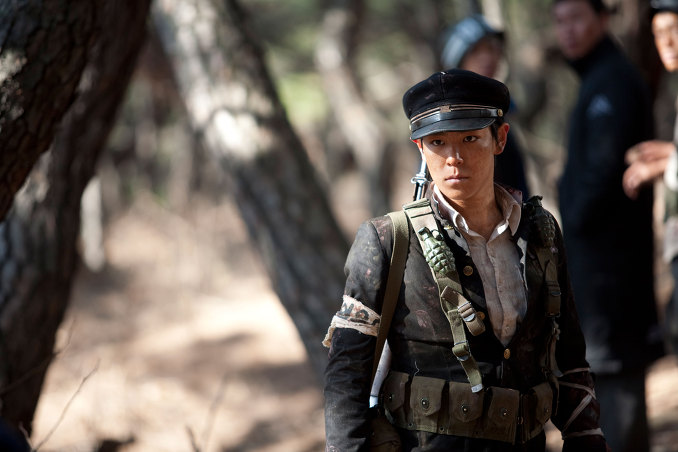
I'm not familiar at all with the stars of the movie since I don't watch that many Korean films, but it seems that the main character, the captain of the 71 student soldiers, is surprisingly played by the K-Pop star, T.O.P. K-Pop (Korean Pop) has been the most popular music genre in Korea for more than a decade and this particular artist, T.O.P (his stage name), actually stars in this movie. Personally, I don't care for K-Pop so I don't really know much of anything about T.O.P but what I do know is that he is a widely acclaimed K-Pop artist and is one of the biggest reasons why this movie was such a huge success in the box office. I don't know about his career as a singer, but I can say that he has potential in an acting career. I was surprised to find out he was a singing sensation after seeing the movie because he played his role very well. He acted very seriously and dramatically which was very appropriate for this movie. In fact, his character seemed to lean toward more of the angry mood since he portrays this student bearing the responsibility of other student soldiers and protecting a defensive military point. It's hard to believe this T.O.P guy is a K-Pop star with that kind of acting skill.
Can you believe this guy....
...and this guy are the same person???
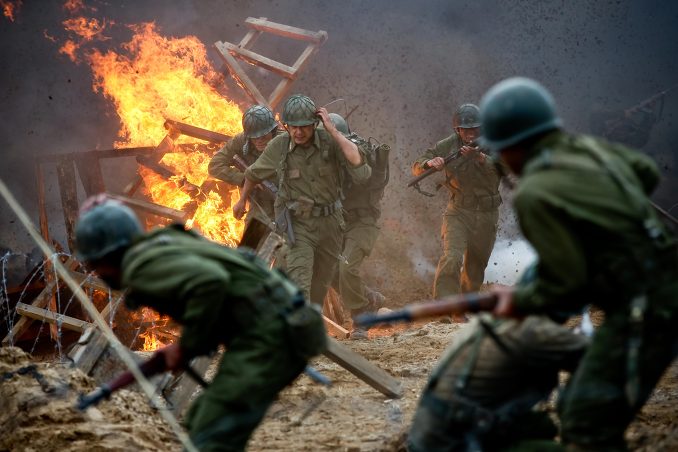
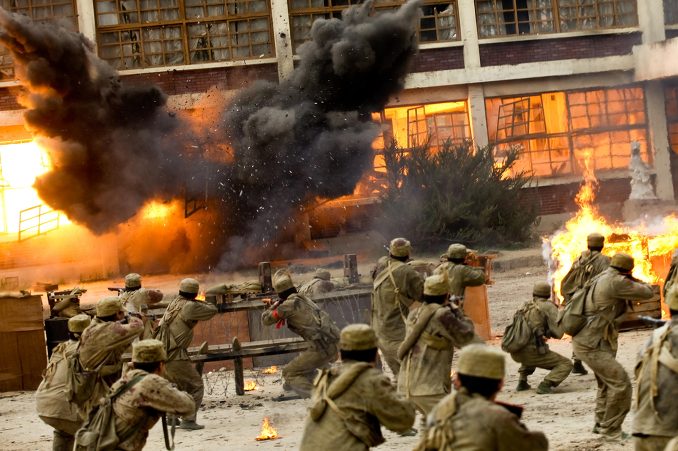
The movie, as said before, is like many familiar war movies including the cinematic elements. The shots contain quick movements of the camera during the battle scenes and use of discontinuity editing. The camera also shakes a lot when explosions occur or barrages of gunfire are ensuing. The angles will mostly consist of close ups of soldiers and long shots of them fighting and the occasional use of extreme long shots to portray the massive armies and scenic views of the battlefield. Lighting was pretty average with not much variation at all since most of the movie is taken place outdoors during the day. Emotional cues on the actors were pretty vital for the movie so close ups on faces were common. Also during battle scenes, editing was very important so the movie used a lot slow-motion in many of the intense fighting and shooting scenes. Overall, there wasn't anything different about the movie's special effects, shots, and editing compared with other war films since the movie focused more on the story and characters.
A scene I want to talk about is the beginning of the final battle scene when the South Korean student soldiers are defending their school base from the incoming North Korean brigade. Clearly outnumbered, outskilled, and outgunned, the young South Korean students set up their most strategic defensive position to try and halt the North Koreans. With the use of buried grenades acting as land mines, and constructed walls as cover, the South Koreans are able to take out a good number of the North Korean army in a bloody barrage of bullets and explosions. But as the scene progresses, the North Korean men keep on coming as the students find it more difficult to keep up with their numbers. The scene portrays the typical battle scene of the war movie and uses simple but realistic special effects to make the battlefield come alive. You can also notice how the camera switches back and forth between the two sides to show how the shooting of the students affects the casualties of the North Koreans. Prior to the shootings, you can also see how the camera focuses on the intensity and expressions of the determined student soldiers ready to defend the school and how the subtle zooming of the camera builds up suspense. When the firing does start, the camera gets very shaky and disoriented so to make the audience feel like they are in the middle of the battle and cringe over every shot. This scene also demonstrates the importance of the story as it shows how well-trained and prepared the students became which is exemplified through their organized defense. It makes the audience realize that they are ready for battle and have more courage and determination than ever before to perform their call of duty.
Click Here to watch the scene. Warning though because it is a war scene, so there is obviously a lot of death and blood and killing.
71: Into The Fire was a good war movie, but I wouldn't consider it one of the greatest. I like the fact that it's a movie about the Korean war since there aren't many out there, and there were definitely moments in the movie that made me feel really sad or touched as expected of Korean drama films. In fact, the whole story is one worth remembering and reminiscing over considering the fact that it is a true one. The courage of those young soldiers should be one written for the history books and should set an example of youth and Korean pride. The story definitely uses lots of character development so to make the audience connect more with the young men and feel sadder over their tragic deaths. However, the movie displayed poor and dull acting in some characters like the main general of the North Korean army, and it sometimes showed cliche cheesy shots of explosions and unnecessary intensity. It gave an unrealistic vibe to the movie at times which completely killed the mood. Overall though, it was a successful movie to commemorate a victorious historical moment and it did a good job to appeal the necessary information and emotions towards the audience. I'd give this movie a 7/10.
Actual photograph of the 71 student soldiers at P'ohang-dong girls' middle school.
Incubus is a horror movie about a traveling family on a road trip. During this road trip, the family unfortunately gets a flat tire where they stumble upon a nearby community village that seems pretty isolated in the middle of the woods. While there, they learn of an eerie cult that the village grows concerned of somewhere in the woods. Unable to find a place to stay while their car is being fixed, the family ends up finding the house of the cult. Contrast to the community rumors, the family discovers that the cult is very accepting and welcoming and gladly let the family stay as long as they want. However, soon the women of the family find it very uncomfortable with the cult members as they get separated from the family and are taken advantage of. They eventually become abused, raped, and killed by these cult members from crazed obsessions and the men of the family find it difficult to escape. Soon the men are conformed into the cult and join them in their obsessive beliefs and habits.
The movie will cast some several growing stars to help build up a growing audience and attract viewers. Dustin Hoffman plays as one of the cult members, Clint Eastwood as the cult leader, Richard Dreyfuss as the family father, Julie Christie as the mother, Melissa Sue Anderson as the daughter, and Jason Bateman as the son. The cast here we chose because many of these actors are known for their serious roles and hope that this movie will help spark their acting careers. The director of the film is William Friedkin who also directed The Exorcist. He has shown that he can direct a very successful horror, specifically a horror film about demonic superstitions and corrupted people. The studio helping to make this movie is a small studio called Laurel Group Inc. which was involved in the Night of the Living Dead. Our distributing company was Bryanston Pictures which also has helped in the horror industry such as Texas Chainsaw Massacre and The Devil's Rain.
The genre of this movie is obviously horror. Because it's the 1970s, violence and sex start to become a more popular thing in movies. Viewers want to see more mature and hard-edged stories that makes them cringe or think twice about. This movie provides a horror story that involves psychological torture and disturbances on the women and violent death scenes in hopes to entertain this new 1970s phase. Also this movie provides a blurred concept of good and evil which is also a 1970s film characteristic. This is because as the movie progresses, the viewer sees the men of the movie struggle between the ideals of the cults and the situation they are in. It exemplifies how man can be easily induced to blind leadership and how we cannot tell evil from good at certain times. This movie is essentially a statement on the fact that the men in the movie are clearly corrupted to the point where their free will is no longer there.
The movie is rated R due to the disturbing violence, sexual content, nudity, and language. The movie will be very grotesque obviously not suitable for children. This movie is mostly focused on the attract and entertain adults who enjoy rash movies and story lines that aren't just happy endings. It helps to create a unique style of story telling and movie making in a vulgar style.
Our group did a good job in creating this movie and there really isn't a lot to change about this movie. But if I had to change it, personally I would fix up the story to avoid some plot holes. Like I probably would not involve a community prior to meeting the cult. I would definitely focus a lot on make-up to make the gore of the film as realistic as possible to make this really fit the horror genre.

 Above is the official trailer for Inception. Inception is a 2010 science fiction thriller about a team of thieves whose profession involves entering the minds of their targets and steal thoughts, ideas, or plans. Christopher Nolan (The Dark Knight and Memento) directed and wrote this movie to create another psychological thriller that involves an ingenious story about the mind. Dom Cobb, played by Leonardo DiCaprio (Titanic and Django Unchained), is a professional dream extractor who is an expert on the complicated method of entering someone's dream to extract certain ideas. However due, to previous complications with this in his personal life, he is forced to be on the run constantly. Soon, a powerful businessman offers him the opportunity to return home to his family if he and his team are able to complete an impossible task to plant an unconscious idea rather than take one. Cobb accepts the dangerous task as he and his team risk their very sanity in the world of the human mind.

 The scene that I'd like to focus on is the hallway fight scene where Arthur, played by Joseph Gordon-Levitt (500 Days of Summer and Looper) is fighting one of the dream's projections, people the subconscious creates that kill invaders, in a hotel corridor. In the movie, the team has already entered the 1st level of the dreams be in the back of a moving van, and then move into the 2nd level which is in a hotel. While they are in the hotel, the team moves into the 3rd level while Arthur stays behind to wake them up in time. However, he is interrupted by a projection and the fight between them ensues in the hallway, but because of the car chase in the 1st level, Arthur and the projection find themselves fighting each other in shifting gravity making the scene that much more intense and entertaining. The scene involves a lot of back and forth shots between the 1st and 2nd level letting the audience know that the two sequences are occurring at the same time. Camera angles include quick shot changes and one continuous shot of the choreographed fight. Interestingly, this continuous shot stays with the hallway so it looks like the men are just flying around the hallway while fighting. It's a very cool shot, but what makes it even cooler is the fact that this shot was not computer generated. That's right, the whole fight scene was real including the hallway. Christopher Nolan actually created a massive suspended corridor that rotated constantly and put the actors to fight in there. Then he just rotated the camera with the hallway to give it that unique sequence the audience remembers. Talk about dedication.