
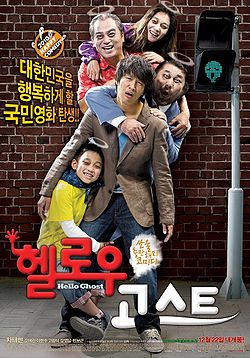

South Korea is a very unique nation. It's history goes back thousands of years but much of it consists of conflicts with neighboring countries like Japan and China. By the beginning of the 20th century things don't get much better for Korea being under Japanese occupation during the Second World War and then into a civil war right after. In fact, technically South Korea is a relatively new country. Despite the prolonged conflicts and political complications in the past, South Korea has been able to get back on its feet very quickly and even become a world superpower economically. Interestingly enough, because of American influences, Korea has developed culturally throughout the decades especially in the film industry. Korea was first able to produce movies regulated by the government but eventually it became a practiced commercial industry where even today, some Korean films exceed that of many Hollywood movies. To see for myself on how far Korean cinema has gone, I decided to watch three Korean comedy/drama films since this genre is what Korean media is famous for. The three films are (in the English titles) Marathon, Take Off, and Hello Ghost.
Korean films are very different from American Hollywood movies. The style, acting, cinematography, etc are all aspects that make a good film, but Korea tends to execute these differently than what we're used to. When they movies to specific genres, they really like to emphasize the "drama" or "comedy" in their films. What I mean by this is that I've noticed that Korean acting in very dramatic scenes are VERY dramatic. It's as if Koreans have really mastered an art to playing into the emotion and use the perfect amount of context, acting, and music to make a scene so sorrowfully beautiful. In contrast, comedic situations tend to be a lot more uplifting and family-friendly for the audience. It's like Korean films experiment mostly on the extremes of movie genres and hardly touch the middle end. The best way I can really describe Korean comedy is that in American eyes, they may see some scenes as kind of cheesy or childish. The way the actors react and the music in the background is all a little too giddy, but the thing is that those who are accustomed to Korean culture and understand way the dialect, it's perfectly normal and funny.
 One of the movies that I watched is called Marathon, a 2005 film directed and written by Jeong Yoon-chul. The movie is about a mother and her autistic son struggling to live a normal life. However, the mother finds it more difficult as the years go to have her son accepted into society and maintain a broken family. The only thing she and her son find solace in is his remarkable enthusiasm and talent for long-distance running. After months of training with an alcoholic ex-marathon runner, the son hopes to accomplish running a marathon under 3 hours in hopes to make a champion of himself and make his family proud. This film obviously just screams major drama from the story itself with the whole disabled son and his mother training for a sports goal. This movie really takes you into the lives of this mother barely able to support her family and still has to take care of a 20 year old autistic man. It makes you feel for this mother as if you are the one struggling too. This movie really fits with the Korean drama style as it really does emphasize the emotional aspect. Korean writers and directors tend to focus on the emotional appeal of the movie to make the plot more riveting and alive. That's what Marathon really did a good job with as watching this movie makes you live with the family and feel just as happy or sad as they are in the movie.
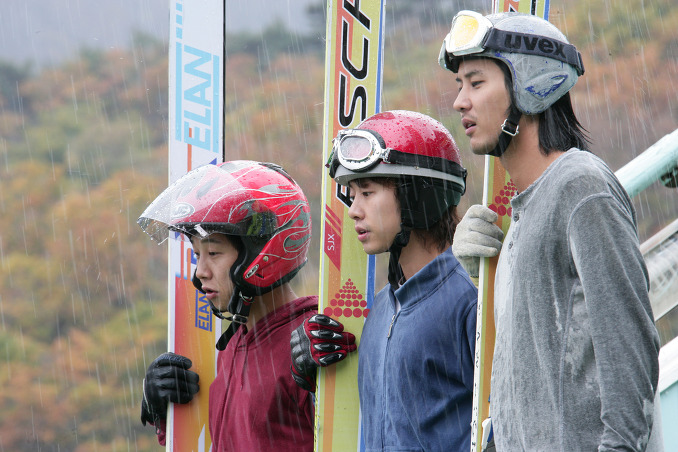 The next film I watched was Take Off, 2009 sports film directed by Kim Yong-hwa. The movie is about the first Olympic ski jump team from South Korea in 1998 and their struggle to train, get national support, and get along with each other. What you can see from this movie is some American Hollywood influence in it starting with the fact that it's somewhat of a cliche sports film consisting of dissimilar teammates, a coach to bring them together, and even one of those training montages that makes the team pro in 5 minutes. However, most of this film expresses so much about Korean culture and cinema style. First, the whole story revolves around a rookie sports team doing an unknown/unpopular sport in a very conservative nationalistic nation. All throughout the movie you get to experience Korean culture first hand with context of Korean family lifestyles, Korean mentalities, and even shots of rural and urban Korea. In terms of cinematic styles, this movie especially demonstrates my previous point in that its comedic scenes are very uplifting and cheerful. But its dramatic scenes are full of intense shots, beautiful music, highlighted angles and slow motion to really push into the emotions of the audience. This piece is a great example of showing the extremes of comedy and drama in Korean cinema while also putting in some Hollywood flavor into it. It really is no surprise to see that it so well with nearly 53 million dollars in the box office according to Wikipedia (Wiki article).
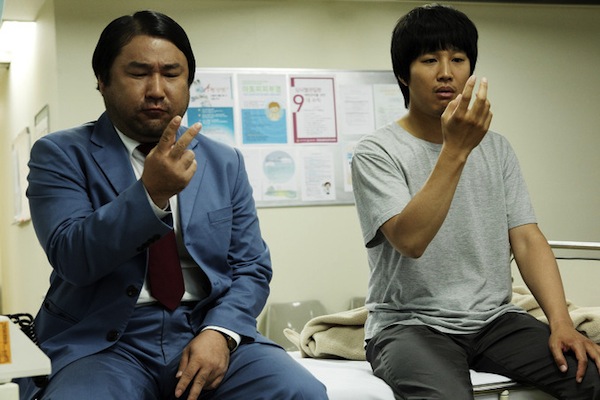 The final movie I saw was my personal favorite of the 3. In actuality, it's one of my now favorite movies. It's called Hello Ghost and it was made in 2010 directed by Kim Young-tak. The story follows a suicidal man who falls short of death after many attempted suicides. However after his closest attempt, he now has the ability to see ghosts who unfortunately use his body for their own free will. In order to rid these ghosts out of his life and body, he must go on a self-discovering journey to help each ghost in their favors to put them at peace. This movie was honestly the prime example of my previous point for the Korean movie style. Take Off was a good example too, but this one really demonstrated exactly what I said. The movie starts out really slow and cheesy in the beginning that it really kind of tests your patience as a viewer. But seriously, the movie grows on you with its clever plot outline and its use of back and forth humor and drama technique. Throughout the movie are so many scenes that I would say can be considered kiddish or childish meant for comedic humor, yet its drama scenes are so surreal and moving that it makes the audience want to cry. And when I mean kiddish, I really mean it looks like it was meant of elementary kids with the playful music and the cute icons. Just take a look at the trailer, and tell me you can't see this movie being any funny or eye-watering sad (Hello ghost trailer). Definitely not the kind of trailers you see in American movie theaters. However, despite this different style, this movie has proven itself a widely acclaimed success. So successful in fact, that Chris Columbus, director of the first couple Harry Potter movies, is actually planning on remaking this movie in an English version (Chris Columbus remaking Hello Ghost)
What I noticed about these movies is that they all really express Korean lifestyle and culture throughout their scenes and shots. That goes for any foreign film, but Korean films in particular tend to really demonstrate their culture by having the characters involve themselves in activities, restaurants, or home-life as if to show to foreign audiences how life in Korea actually is. For example in, Take Off, you see all sorts shots of rural Korea and the local farmers that work there. It shows the lifestyle of Korean vegetable and rice farmers and the traditional side of Korean culture.The movie also demonstrated some of Korean traditional family values through the side story of one of the athletes and his extremely strict father especially in one scene where the father is beating his son with a golf club for ski jumping instead of helping the family restaurant. Another example is in Hello Ghost, where there will be shots of the main character eating certain Korean foods in restaurants, watch animations, and even show urban home-life where he shows how a typical middle class Korean lives in the city. The movies show profound examples of Korean culture whether they are subtle or right at your face which is what I believe is part of Korean national pride. South Korea tends to demonstrate a lot of national pride and they'll try to demonstrate this in as many ways possible. In this case, they even attempt to do so in their movies.
Here are the full movies of Take Off and Hello Ghost with English translation. Marathon is actually on Netflix instant access.

Awesome job here. You explain the differences between the two cultures' films very well. I've heard that Korean filmmaking has undergone a bit of a revolution in the past decade, and as you suggest, the films are really strong and getting even better. I'd like to explore more of these films. I'll definitely add Hello Ghost to my queue. Great analysis of the films. Sounds like you really got a lot out of it.
ReplyDelete